INNOVATION
Parked but Productive: France's V2G Rollout
France's Mobilize V2G service now spans five Renault and Alpine models, turning EVs into grid assets that slash charging bills
4 Oct 2025
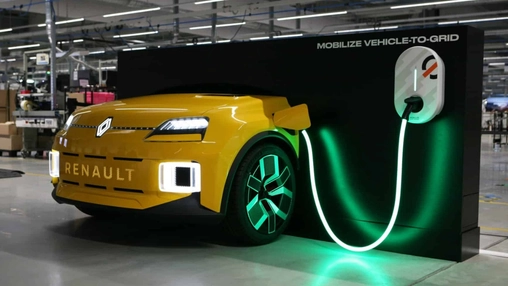
France has quietly built the most advanced Vehicle-to-Grid market in Europe, and Renault is making sure its entire lineup is along for the ride. Mobilize's bidirectional charging service, launched in 2024 on the Renault 5, now extends to the Alpine A290, Renault 4 E-Tech, Megane E-Tech, and Scenic E-Tech. The Alpine A390 is next in line.
The system pairs an 11 kW bidirectional onboard charger with the Mobilize PowerBox Verso home unit and an electricity contract managed through The Mobility House. Plug the car in, set a minimum charge level and a departure time in the My Renault app, and the system handles the rest. It draws power when the grid is quiet and renewable output is high, then pushes stored energy back when demand spikes. Drivers who keep their vehicle connected for around 16 hours a day can save up to 600 euros annually compared to a standard tariff, according to Mobilize pricing data from October 2025.
That kind of performance depends on infrastructure France happens to have. A national smart meter rollout and a single distribution operator, Enedis, have given the country the standardized grid architecture V2G needs to function at scale. Germany is still working through the regulatory details. The Netherlands and the UK are targeting 2026. France is already selling subscriptions.
What Renault is doing here goes beyond a clever charging feature. By baking V2G into its full electric range rather than reserving it for a flagship model, the company is reframing what an EV is. These cars are not just transport. Parked and plugged in, they become flexible storage nodes on a grid that increasingly needs them. As solar and wind generation introduce more variability into France's electricity supply, a fleet of bidirectional vehicles offers a load-balancing tool that requires no new poles, cables, or substations.
It is a commercially viable answer to a grid management problem that only gets harder as renewables scale up. France got there first because it had the right plumbing. The question now is how fast the rest of Europe can catch up.
Related News


SUBSCRIBE FOR UPDATES
By submitting, you agree to receive email communications from the event organizers, including upcoming promotions and discounted tickets, news, and access to related events.