INVESTMENT
The Race to Power France's Roads
France's EV charging sector draws over €4 billion in fresh capital as operators race to build out ultra-fast and private networks
29 Sep 2025
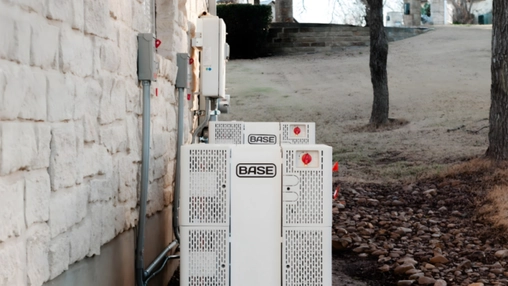
France's electric vehicle charging sector has attracted more than €4 billion in capital commitments as private investors and public institutions move to address a widening infrastructure gap.
The funding has arrived in two distinct tranches. In September 2025, charging operator Waat secured a €100 million round led by asset manager DWS and state-backed Bpifrance, with existing backer Raise Impact also participating. The raise brought Waat's total capital to €130 million since its founding in 2018, a notable outcome given that European climate tech funding fell roughly 40 per cent in the first half of last year.
The proceeds are earmarked for expanding Waat's private charging network across condominiums, social housing, and commercial buildings in France and the wider European market, with a target of 250,000 active charging points by 2030. The company reported revenues of approximately €69 million in 2024 and has posted positive EBITDA for three consecutive years, a financial profile that helped attract institutional backers at a time when many charging operators remain loss-making.
The second commitment is larger in scale. Charge France, an alliance of 13 charging point operators formed in early 2025, has collectively pledged a further €3 billion by 2028, on top of more than €1 billion already deployed by its members. The group spans highway, urban, and commercial charging segments and is targeting a quadrupling of France's ultra-fast network, from roughly 10,000 to 40,000 high-power charging points. The International Energy Agency has recognised the initiative as a significant milestone in France's national charging rollout.
The policy backdrop is driving urgency. The EU's ban on new combustion engine vehicles takes effect in 2035, and France has set a target of 400,000 public charging points by 2030. Operators are investing now to secure long-term demand before the market matures.
Taken together, the two commitments point to a structural shift in how charging infrastructure is being financed. Institutional capital is increasingly treating the sector as a regulated-utility-style asset. Bpifrance's participation signals government alignment with private deployment strategies. Whether consolidation among well-funded operators will translate into a network capable of meeting national targets remains to be seen.
Related News


SUBSCRIBE FOR UPDATES
By submitting, you agree to receive email communications from the event organizers, including upcoming promotions and discounted tickets, news, and access to related events.