RESEARCH
Your Electric Car Could Be Doing a Lot More Work
EY and Eurelectric find smart EV charging and V2G tech could save European grid operators €4bn a year while cutting ownership costs
10 Mar 2025
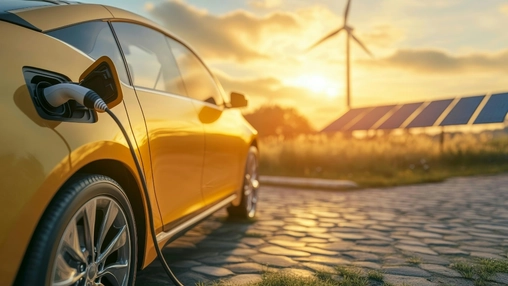
Europe's electricity grids face a familiar problem: the energy arrives at the wrong time. Renewables generate power when the wind blows and the sun shines, not when commuters plug in after work. A report published in March 2025 by EY and Eurelectric suggests that the solution may already be sitting in millions of driveways.
The study, "Plugging into Potential," models EV charging behaviour across six European markets. Its central finding is straightforward. If electric vehicles charge when power is cheap and abundant, rather than when owners happen to return home, grids become easier and cheaper to manage. The projected savings are not trivial. Smarter coordination of charging cycles could reduce the total cost of grid investment between 2025 and 2050 from €67 billion to €55 billion, delivering €4 billion in annual savings for grid operators.
The more ambitious version of this vision goes further. Vehicle-to-grid technology, or V2G, would allow cars to discharge stored electricity back into the grid at moments of peak demand, turning each vehicle into a small power plant. By 2030, EVs participating in these schemes could theoretically supply up to 4% of Europe's total annual power needs, enough to run approximately 30 million homes.
France, the report notes, is better placed than most to capture this value. A rollout of Linky smart meters now covers more than 95% of households, and a single national distribution operator, Enedis, provides the standardised infrastructure that fragmented markets elsewhere lack. French drivers of large vehicles and SUVs could reduce their total ownership costs by up to 15% by combining smart tariffs with V2G participation. Compact and family car drivers would see more modest but still meaningful reductions of 7% to 9%.
The obstacles are less technical than behavioural. Negative electricity prices across European markets rose 160% year-on-year, a clear signal that the grid already struggles to absorb surplus supply. Yet consumer awareness of smart tariff options remains low, charging hardware and vehicle software often fail to communicate reliably, and few retail energy products offer financial rewards compelling enough to change habits.
The report provides a useful map of what needs doing. Whether policymakers will act before the economics of grid flexibility deteriorate further is another question entirely.
Related News


SUBSCRIBE FOR UPDATES
By submitting, you agree to receive email communications from the event organizers, including upcoming promotions and discounted tickets, news, and access to related events.